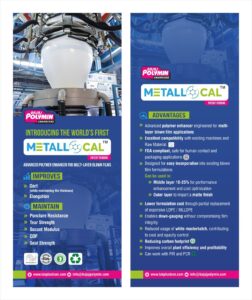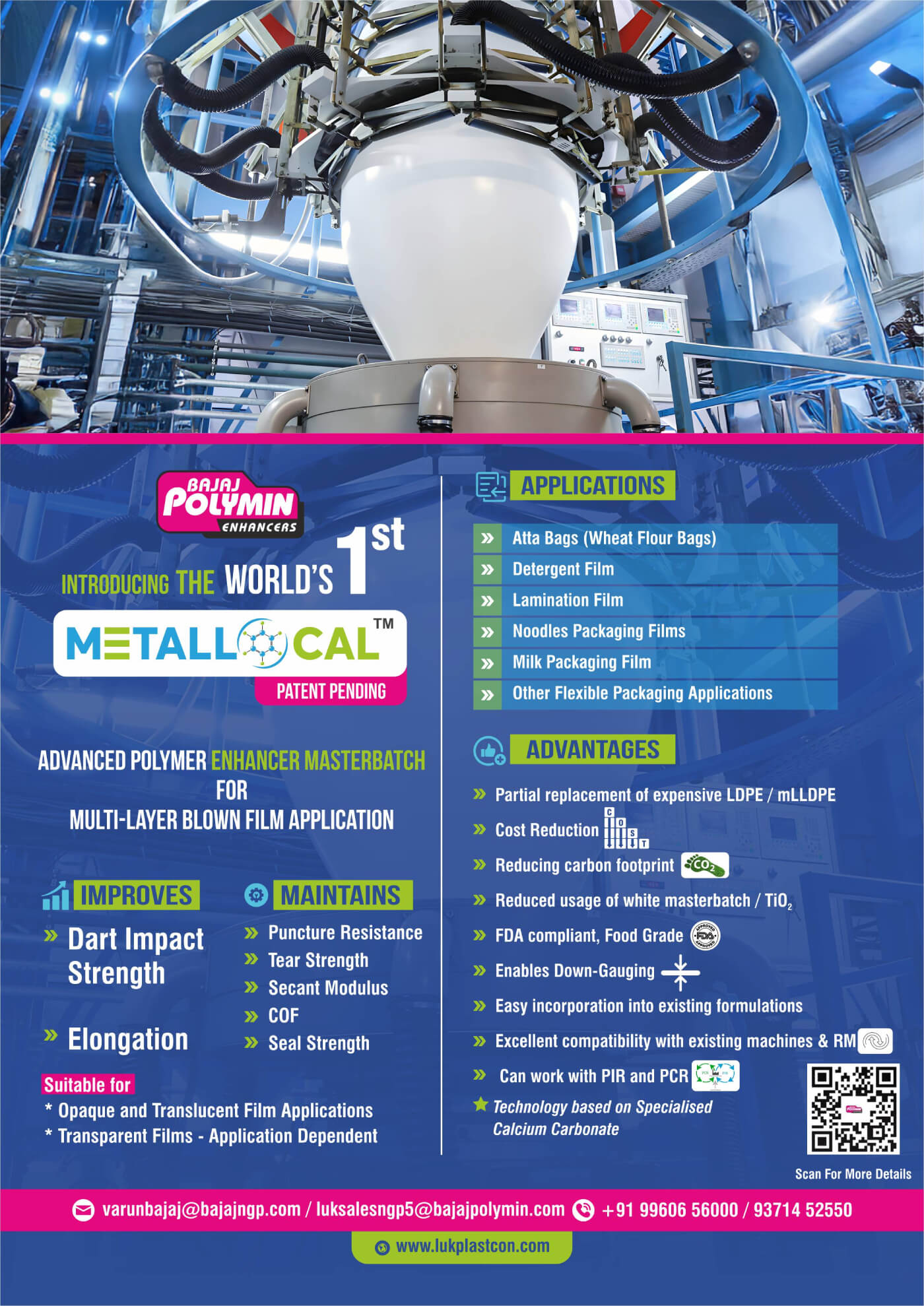
 is an advanced polymer enhancer masterbatch based on surface-
engineered calcium carbonate, designed to improve mechanical performance and enable
cost optimisation in blown film applications.
No. Unlike conventional CaCO₃ fillers, METALLOCAL™ is engineered to enhance polymer
performance, not merely add loading. It helps retain or improve mechanical properties
while reducing resin cost.
METALLOCAL™ is compatible with:
- LDPE
- LLDPE
- mLLDPE
- Blends containing PIR and PCR
Typical let-down ranges from 5% to 25%, depending on:
- Film structure
- Target thickness
- Mechanical property requirements
- Resin selection
Yes, but transparency is application-dependent.
- Best suited for opaque and translucent films
- For transparent films, trial evaluation is recommended with respect to allowable haze limits
METALLOCAL™ is designed to maintain seal strength and COF within acceptable ranges. Final performance depends on:
- Let-down level
- Film structure
- Additive package
No. METALLOCAL™ enables partial replacement of expensive polymers, not full substitution. The goal is cost optimisation with performance balance.
METALLOCAL™ is FDA approved
METALLOCAL™ is suitable for food-contact applications, subject to:
- Compliance of base polymer
- Final formulation
- Applicable FDA / food-contact regulations
No major changes are required. METALLOCAL™:
- Processes well on existing blown film lines
- Has good dispersion
- Does not require special screw or die modifications
- Enables down-gauging
- Reduces overall polymer consumption
- Supports PCR / PIR usage
- Helps lower the material-related carbon footprint
METALLOCAL™:
- Reduces dependency on TiO₂
- Adds mechanical value, not just opacity
Delivers cost + performance benefits together
- Atta (wheat flour bags)
- Detergent packaging films
- Lamination films
- Noodles packaging films
- Milk packaging films
- General flexible packaging films
- And many more flexible packaging film applications (Contact us to Co-create)
METALLOCAL™ is based on surface-engineered calcium carbonate designed for polyolefin processing.
When used within recommended loading levels, properly pre-dried, and processed under normal PE temperature and shear conditions, it does not cause abnormal screw or barrel erosion. As it does not contain any type of waxes and other harmful additives.
Best Practices to Minimise Wear:
- Follow recommended loading limits
- Always pre-dry METALLOCAL™
- Avoid excessive shear and overheating
- Use standard nitrided or bimetallic screws for long-term operation (recommended for any mineral-filled system)
Under normal operating conditions, wear behaviour is comparable to other mineral-based masterbatches used in blown film extrusion.
When METALLOCAL™ is properly pre-dried and well dispersed, no significant reduction in filter or screen pack life.
Guidelines for Optimum Filter Life:
- Always pre-dry METALLOCAL™ to avoid agglomeration
- Use recommended screen mesh combinations
- Avoid sudden increases in loading level
- Maintain stable melt temperature and pressure
METALLOCAL™ itself does not negatively impact bubble stability when used correctly in the middle layer. However, since LDPE contributes melt strength, its reduction must be balanced by film structure design.
Best Practices for Bubble Stability:
- Keep skin layers rich in LLDPE / mLLDPE to maintain melt strength
- Avoid reducing total LDPE across all layers at once
- Increase METALLOCAL™ loading step-wise
- Monitor BUR and frost line height during trials
With proper layer balance, bubble stability remains comparable to the base film, even at higher METALLOCAL™ loadings.
The middle layer is ideal because:
- It carries bulk, stiffness, and toughness
- It is not seal-critical
- Optical impact is shielded by skin layers
You can replace expensive LDPE / mLLDPE safely